How an SPF roof works
Two components are mixed at the spray gun and applied to a clean, dry roof. Within seconds the liquid expands into rigid closed-cell foam that bonds to the surface below. We build it to the thickness the roof needs — thicker where water has to be pushed toward drains — then seal it with an elastomeric topcoat that protects the foam from UV and weather.
- No seams. The roof is one continuous membrane, so there are no laps or seams to fail.
- Self-flashing. Foam wraps curbs, pipes, conduit and odd-shaped penetrations without cut flashing pieces.
- Built-in insulation. Closed-cell foam adds insulation value with every inch, which can lower heating and cooling costs.
- Fixes drainage. Foam can be tapered as it's applied to fill low spots and cut down on ponding.
- Lightweight. It adds very little load to the structure, which often makes it a good fit over an existing roof.
- Renewable. At the end of the coating's life, the roof is cleaned and recoated — not torn off.
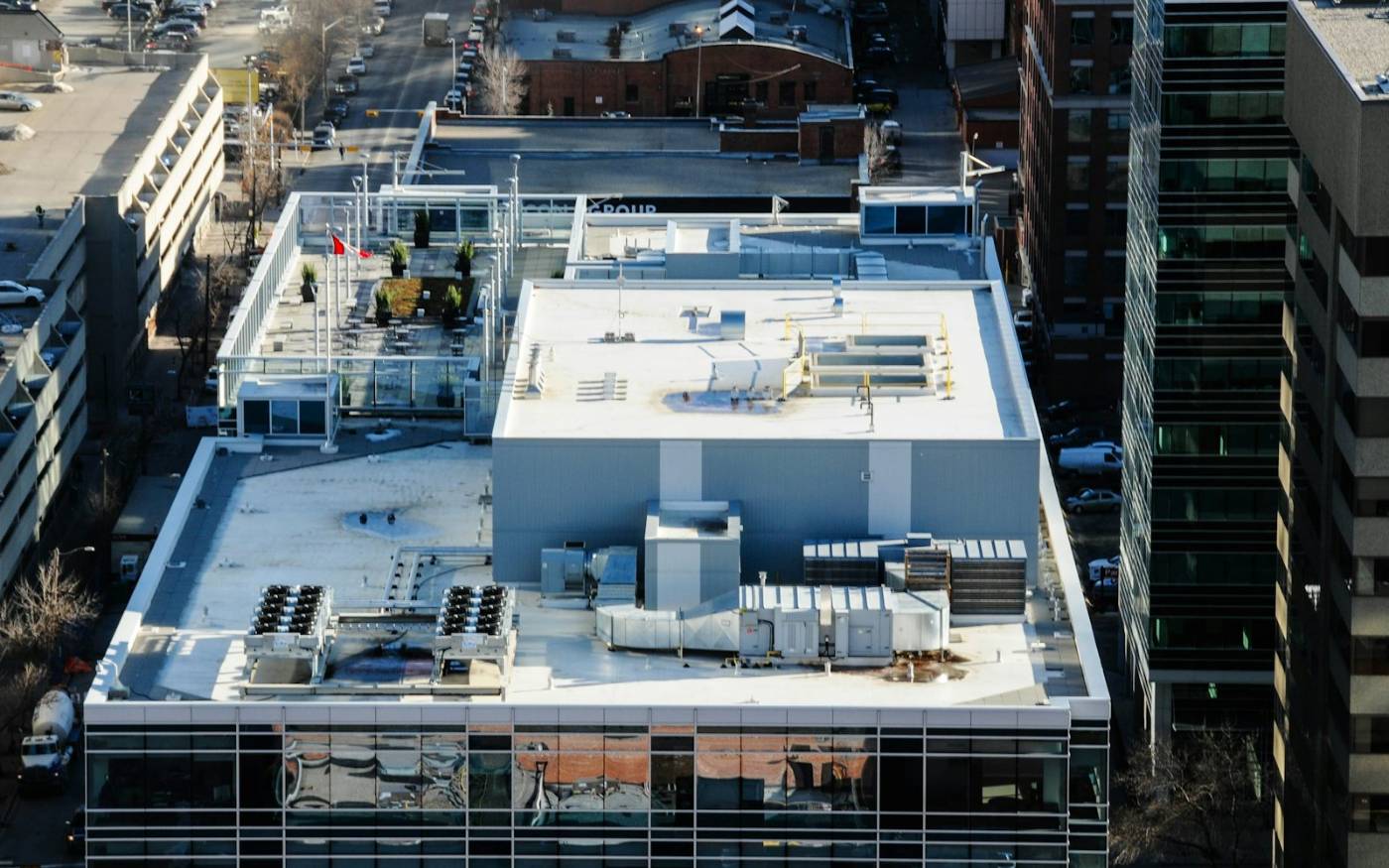
Where SPF makes the most sense
- Metal buildings with leaking fasteners and laps — foam seals and insulates in one step.
- Roofs crowded with penetrations, where flashing every pipe and curb in a membrane system is slow and leak-prone.
- Irregular or domed roof shapes that are hard to cover with sheet goods.
- Dry existing flat roofs where the owner wants to skip tear-off and add insulation.
What it takes to do it right
SPF is only as good as the prep and the conditions on spray day. The existing roof has to be dry — wet insulation comes out first — and we spray only when temperature, humidity and wind are within spec. Overspray is a real risk, so we control wind conditions, mask equipment and plan around parked cars and neighboring buildings. Foam thickness and coating thickness are checked as we go.
Maintaining and renewing SPF
Inspect an SPF roof at least once a year and after hail. Small punctures and blisters are simple to repair with foam and coating. When the topcoat wears thin, we clean and recoat the roof — which resets its life without tearing anything off. See roof coatings and maintenance plans.